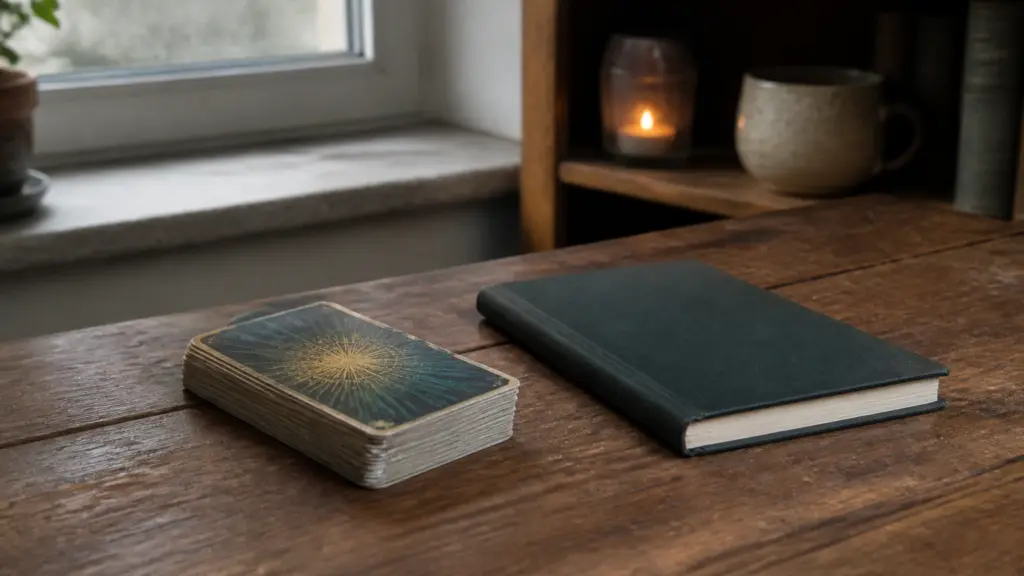

Interest in quick, low-effort ways to reflect on a decision has grown across many online communities. Tarot is part of that trend, and one format stands out for its simplicity: the single-card draw. It asks for one clear question and returns one card, which is read as a yes, a no or a maybe. That compact structure explains much of its appeal to newcomers, who often arrive with one pressing choice and want a fast way to organize their thoughts. Because the format is so contained, people can repeat it whenever a new question arises, building a habit of pausing to consider options from a different angle.

For readers of a local news site such as denizlidenbihaber, who often follow everyday topics and practical curiosities, this format offers an easy entry point into a long-standing symbolic practice. It does not require a deck, a teacher or a long ritual. It requires only a question that can be answered in two directions. That makes it a useful case study in how simple tools shape habits of reflection.
According to the target page’s own description, a free Yes No Tarot Reading draws one card and interprets its answer as yes, no or maybe, explaining the card’s meaning so the user understands why the answer leans that way. The page presents this as an alternative to complex spreads with several positions. In its framing, the aim is a direct sign rather than a long narrative about past, present and future.
Why one card can carry an answer
The page explains the approach by pointing to the character of each card. Every tarot card, it says, carries an inherent energy. Some cards lean toward affirmation, others toward negation, and a few remain neutral or conditional. A reader therefore does not have to invent a verdict from nothing, because the card already suggests a direction that can be turned into a short answer. Imagery, color and symbols give concrete cues, such as light, growth or closed doors, which can be matched to the wording of the question and turned into a clear response grounded in the card itself.
Orientation adds a second layer. The page notes that the card’s core meaning and whether it appears upright or reversed together shape the result. An upright card with a hopeful theme will usually read as a yes, while a reversed card may soften or flip that message. This is a convention within tarot practice rather than a scientific rule, and the page presents it as an interpretive guide.
The profile of the tool also includes its relationship to the wider site. The site that hosts the page describes itself as offering free astrology tools, including birth chart calculation, Sun, Moon and Rising sign lookups, compatibility checks and more than 170 calculators. Within that collection, the yes or no draw is the shortest and most conversational item. It sits beside longer, data-driven calculators that require birth details.
Framing the question
The tool’s own text stresses that the quality of the question matters. A binary question such as whether to accept an offer gives the card something specific to answer. A vague one, such as what will happen this year, invites a spread rather than a single draw. The page lists decisions, relationships and confirmation of a chosen path as typical themes people bring to this format. Phrasing the question clearly, with one subject and one choice in view, helps the reader interpret the outcome without drifting into unrelated worries.
The page also says the reading is meant for both seasoned tarot readers and complete beginners. Experienced readers may use it as a quick check beside their own practice, while newcomers can learn card meanings through the short explanation attached to each result. That educational note is arguably the most useful part, since an answer with a reason is easier to reflect on than a bare word, and repeated use gradually builds familiarity with the core meanings of the deck.
A sensible reading of such a tool keeps expectations modest. A single card is a prompt for thought, not a prediction, and the third outcome, maybe, is a reminder that many choices cannot be settled by a flip of two options. Treating the draw as a way to notice one’s own leanings is a common and reasonable use. The final decision remains with the person asking, who can weigh the card’s message against practical facts, personal values and advice from people they trust.